Worth Noticing
The warmth of old brass
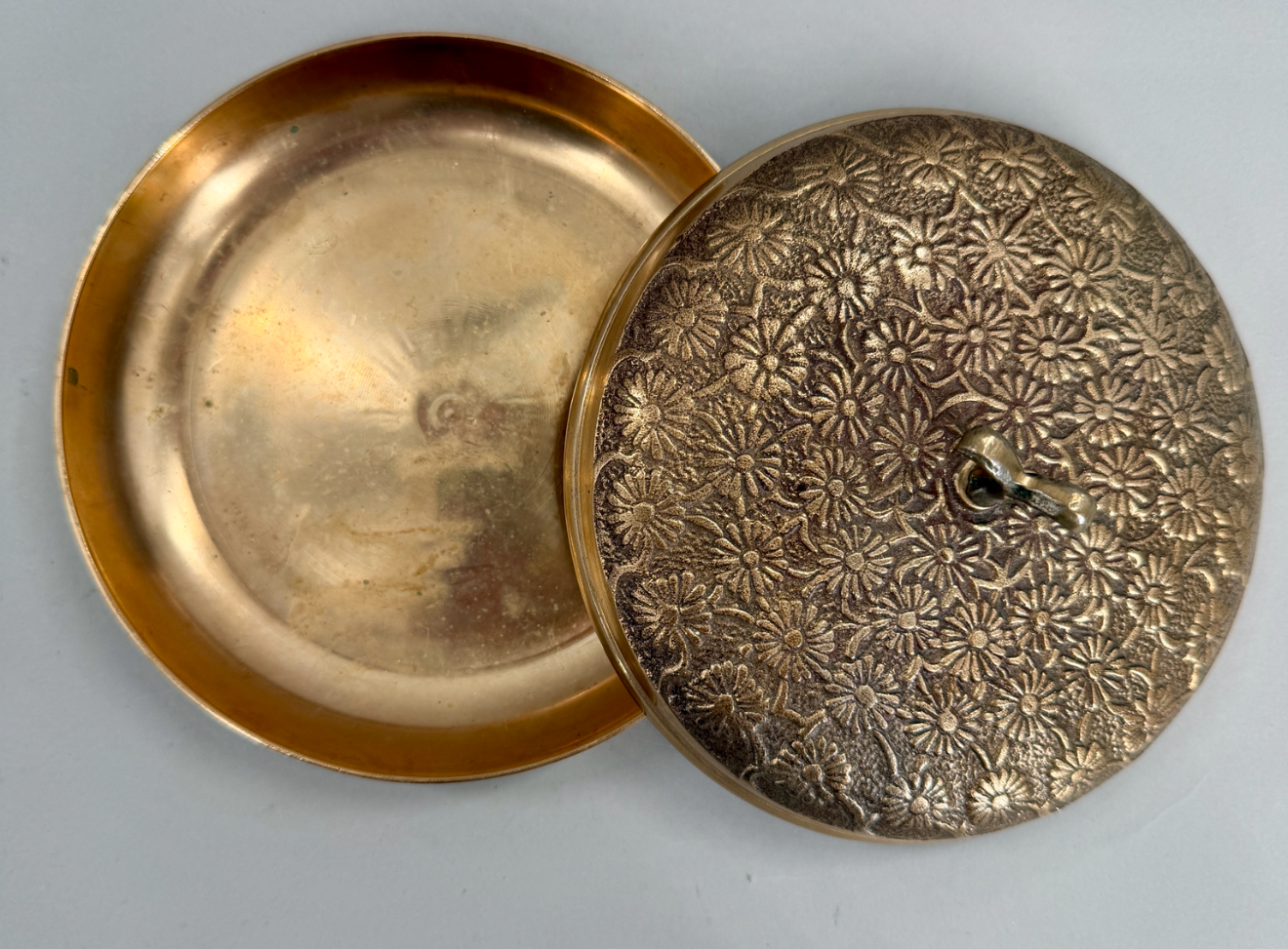
PL-000305Korean Brass Floral Covered Box
Brass rarely ages evenly. It darkens in the recesses, brightens along the high points, and records years of handling in subtle shifts of color and sheen.
That variation is the beauty of patina. It isn’t something to erase. It is evidence that the object has been lived with.
Why old brass ages unevenly
Brass darkens slowly as it meets air and moisture. The recesses, where hands and cloths rarely reach, tend to deepen first, while the high points that are touched and lifted most stay brighter. That gentle contrast is much of what gives relief work its depth.
Solid brass or plated?
A small magnet can offer a first clue. If it holds firmly, there is likely steel or iron beneath a brass-colored surface. If it doesn't, the piece may be brass, or another nonmagnetic metal such as bronze, copper or zinc alloy, so the test is a starting point rather than an answer. Wear at the edges, weight in the hand and the color of any exposed metal can tell you more.
Signs of age and handling
Look for softened edges, wear where an object was usually held, small dents and a mellowed color across surfaces that saw daily use. Casting marks, hand-finished seams and old screws can add to the picture, too.
Why we rarely polish it away
Heavy polishing can remove in an afternoon what took decades to form. Often a soft dry cloth is all old brass asks for. We would rather keep the evidence of a life than make an object look newly made.