Worth Noticing
The breath in hand-blown glass
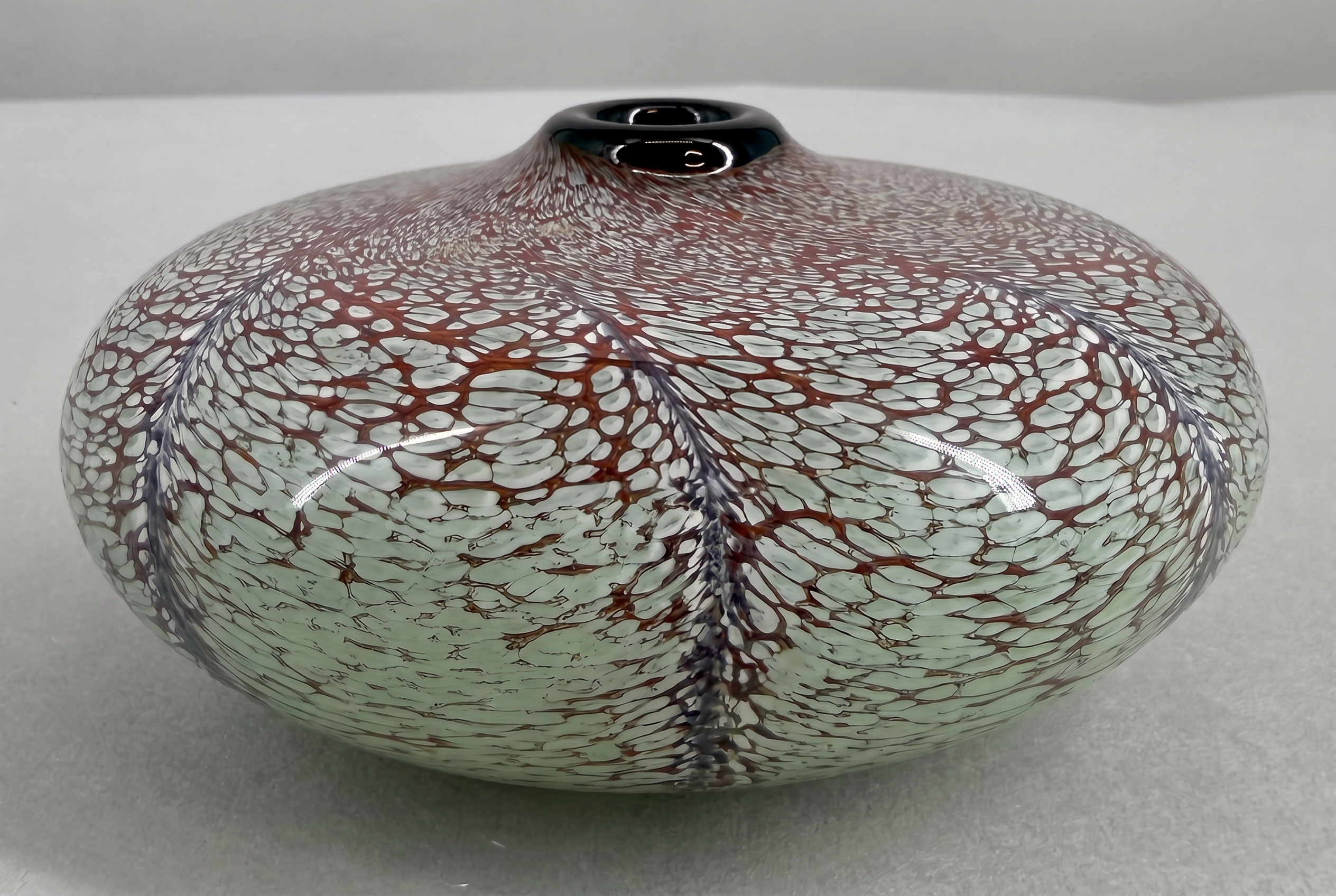
PL-000227Hand-blown squat art-glass vessel
Hold old glass to the light and the surface begins to move. Color shifts. Ridges catch differently. Tiny irregularities and subtle distortions remind you that the material was shaped by heat, pressure, and human hands.
What looks imperfect at first is often what makes the piece feel alive.
Bubbles and seeds
Hold the piece to the light and you may find small trapped air bubbles, often called seeds. They are common in hand-blown and older glass, sometimes round, sometimes gently stretched in the direction the glass was worked. Newer machine-made glass tends to be more uniform, though not always.
Ripples, waves and slight asymmetry
Tilt it against a window. Soft waves in the surface, walls of varying thickness, a body that sits a little off true: these can be quiet traces of glass shaped while hot, by breath, tools and turning.
A look at the base
Turn the piece over. A rough or polished circular scar, the pontil mark, may show where the glass was held on a rod while it was finished. Fine, random scratches on the foot can hint at years of being set down and picked up.
Seams and pontils together
Faint raised lines running up the sides often suggest the glass was blown or pressed into a mold. That doesn't rule out a pontil mark; a mold-blown piece can still carry one from later hand finishing. Each detail adds a little more to the story of how it came to be.