Worth Noticing
The marks that make the object
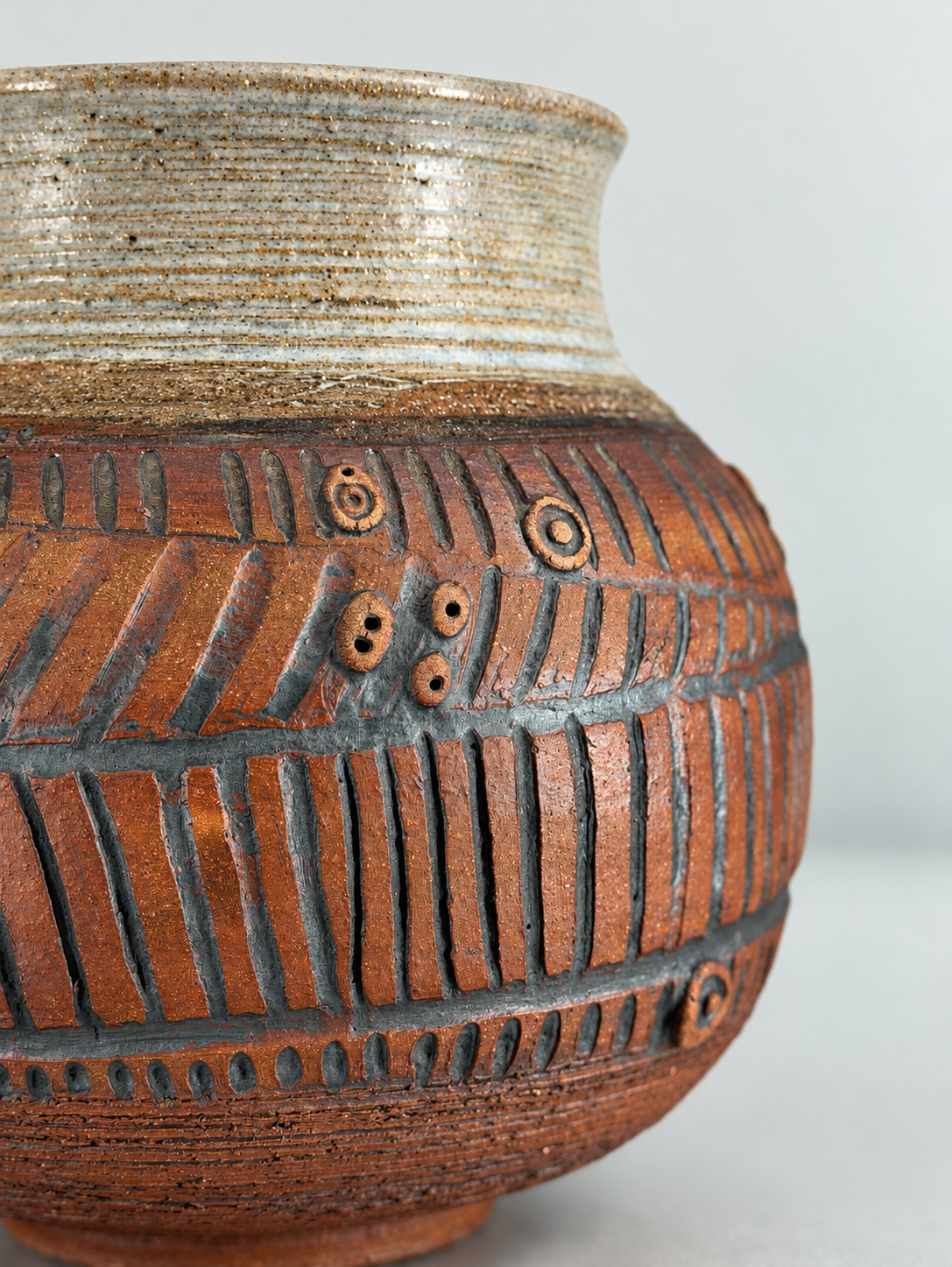
PL-000456Incised studio pottery vessel
A perfectly smooth surface can tell us very little.
Here, lines were cut into clay. Small forms were pressed into it. Glaze settled into recesses and skipped across higher ground. The rhythm changes slightly as it travels around the vessel — evidence that someone was making decisions as the piece took shape.
Those variations are not something to correct. They are part of what lets us see the hand behind the object.
Maker’s marks and signatures
Turning a piece over is often the first pleasure. You might find a name, initials, a small symbol or a date incised into the clay. A mark cut before firing and sealed beneath glaze was likely made with the piece; one added later in ink or paint invites a little more curiosity. Either way, a signature is something to read, not a conclusion on its own.
Impressed stamps and seals
Some potteries and makers pressed a small stamp or chop into the soft clay. These can be crisp or faint, sometimes half-filled with glaze. A lamp held low across the base can bring a shallow stamp forward. Stamps were sometimes shared, reused or copied, so they suggest rather than settle.
Paper labels and inscriptions
Paper labels, handwritten numbers and gallery notes can hint at where an object has been. They are also easily lost, or moved from one piece to another, so we enjoy them as clues and keep looking.
Tool marks and throwing rings
Throwing rings may spiral around the inside of a wheel-thrown pot; trimming marks can circle the foot where clay was shaved away. Incised lines, pressed forms and carved texture, like those on this vessel, let you follow the decisions of a hand as the piece took shape.
Glaze irregularities
Glaze may pool darker in recesses, break lighter over edges, run, drip or crawl away from the clay. An unglazed foot, small kiln marks and shifts in color are often signs of handmade work, though they don't on their own tell you who made it, or when.
Reading the evidence together
No single mark tells the whole story. Marks wear, appear only in part, or are shared by more than one maker. We look at them alongside form, clay, glaze and history, and say plainly whether an attribution feels certain, likely or still unknown. Mostly, they are another reason to look closely.